

Keynotes
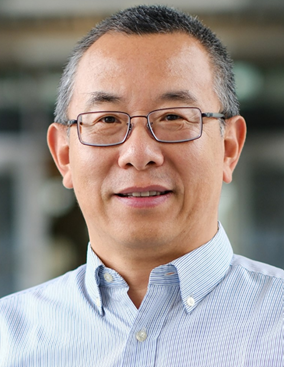
Full Professor and Director of the School of Engineering Science at Simon Fraser University, Vancouver. His research interests include wireless communications and networking, underwater communication and networking, and mobile computing. He has contributed 4 book chapters and over 350 research articles including 150+ journal publications. IEEE Communications Society Distinguished Lecturer (2021–22). Associate editor of IEEE Transactions on Communications, IEEE Internet-of-Things Journal, and IEEE Network Magazine. Recipient of the Dean’s Award for Research Excellence (2021), the IEEE ComSoc Technical Achievement Award (2018), and Best Paper Awards at IEEE ICC’2023, Globecom’2017 and ICC’2010.
The Internet of Underwater Things (IoUT) has emerged as a network of smart interconnected underwater objects to create a worldwide network digitally linking the oceans, rivers, and lakes. This talk presents an overview of IoUT and its applications with a focus on the offshore oil and gas industry and marine transportation and fishery industry. It reviews the challenges faced by marine monitoring and sensing applications, and introduces underwater communications and networking as key enabling technologies for the IoUT, presenting large-scale array networks as technical solutions integrated with passive and proactive network sensing approaches.
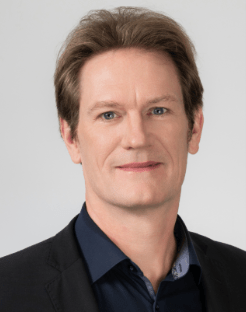
Professor at HKUST(GZ) and Director of the Future Networked Systems Laboratory (FNSL). Chair of the Internet Research Task Force (IRTF) and member of the Internet Architecture Board (IAB). His research lies at the intersection of distributed computing and networking and Internet architecture. He initiated the “Compute-First Networking” research direction and is currently designing new infrastructure for scalable distributed machine learning and multimedia systems. PhD from Universität Bremen, Germany. Website: dirk-kutscher.info
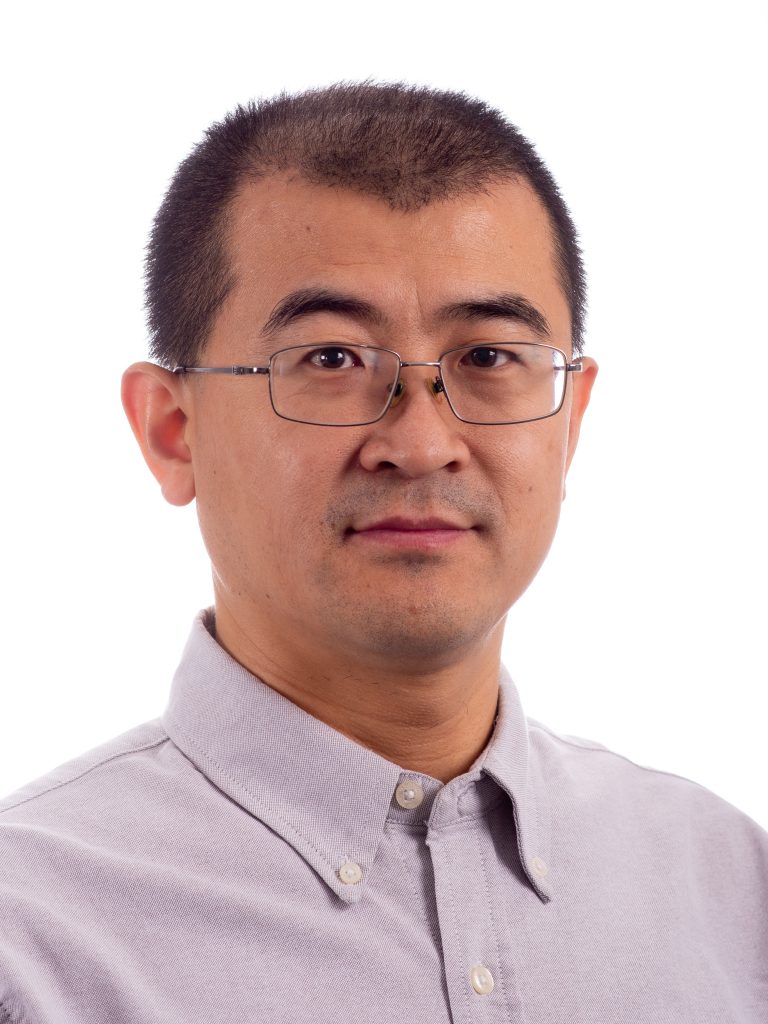
Full Professor with Tenure at Peking University. Previously Senior Principal Scientist at ABB Corporate Research Sweden, Adjunct Professor at KTH Royal Institute of Technology, and Adjunct Professor at the University of Sydney. Standing Committee Member of IEEE Industrial Electronics Society, Steering Committee Member of IEEE IoT Technical Community, Chair of IEEE TC on Cloud and Wireless Systems for Industrial Applications, and Co-Chair of IEEE TC on Industrial Informatics. Associate Editor of IEEE TII, IEEE JBHI, IEEE TCE, IEEE JESTIE, and IEEE IoTM. His research on embodied AI, robotics, control, computing, communication, and electronics has been commercialized in leading industrial products including ABB Mobile YuMi humanoid robot, ABB Ability Condition Monitoring, ABB WirelessHART, ABB free@home, and Hitachi Energy TropOS Mesh.
Driven by the scaling laws for data collection, computing power, and algorithm complexity, industrial automation is evolving towards the new design paradigm of Cloud Fog Automation (CFA). The CFA enables time-sensitive closed-loop control applications over indeterministic cloud and fog computing and wireless networks through control-computing-communication (3C) co-design. Since the “ChatGPT moment”, the development of embodied AI for industrial automation has been significantly accelerated, and recent studies have demonstrated that CFA offers an attractive engineering pathway for realizing embodied AI in industrial automation — expanding the 3C co-design to 4C co-design (cognition-control-computing-communication). This talk introduces the latest progress in CFA and embodied AI, with a focus on the challenges and opportunities when they come together.